
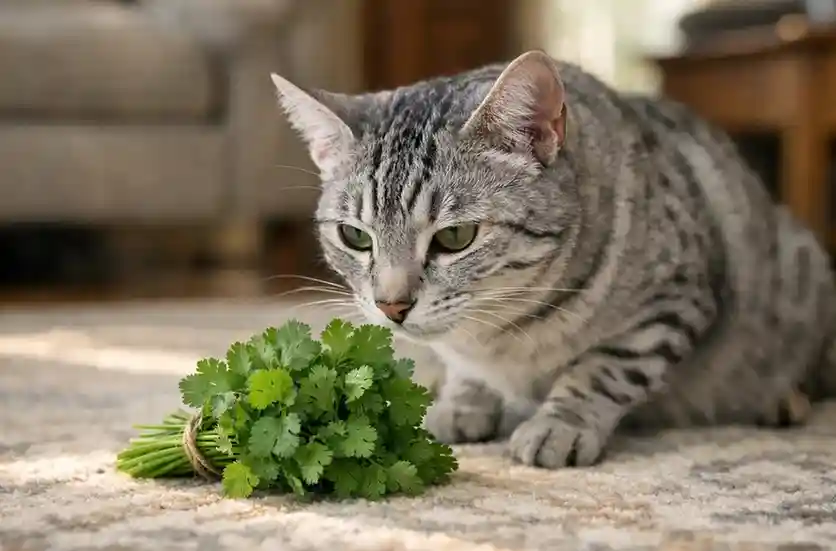
Can cats eat cilantro safely?
This is a question that I hear frequently, upon the occasion of a curious cat sniffing a cutting board or chewing a fallen leaf. The brief fact is that cilantro is not a toxin to cat, but it is unnecessary food as well. Little portions tend to be safe, whereas a bigger portion can disrupt the digestive system and bring some short-term discomfort.
My name is Dr. Elara Vance, an American author specializing in evidence-based and concise pet nutrition issues. In my opinion, cats need to be given plain, straight forward explanations without fear appeal and hollow promises. My goal is to help you make calm, informed feeding choices for your cat.
In this blog, I explain cilantro safety, possible benefits, digestive risks, kitten concerns, fresh versus dried forms, and when you should completely avoid offering it to your cat.
Cilantro & Cat Safety
Cilantro is usually deemed harmless to cats, yet its safety varies according to the amount, frequency, and the level of tolerance of your cat. I would never suggest using it as a source of food and always as a curiosity. Small exposure is usually fine, while repeated feeding increases digestive risk.
Non-Toxic Plant
Cilantro is not rich in substances that cats are poisoned with. In a healthy adult who tries a small portion, severe reactions are not likely. I still suggest moderation because a cat’s body is designed for animal protein, not plant digestion.
Portion Matters
One or a few bites of leaves are usually permitted but large amounts cause stomach upsets. I would not forget to remind you that cats do not digest fiber and even the harmless plants will make them vomit or diarrhea when they consume in excess.
Individual Sensitivity
Some cats handle cilantro without issues, while others react quickly. I recommend keeping an eye on your cat when the first time. In case you find vomiting, diarrhea or lethargy, then you must avoid cilantro in the diet of your cat.
Not A Dietary Need
Cilantro adds no essential nutrients for cats. I stress that complete cat food already provides everything your cat requires. Cilantro should never replace meals or be offered regularly, only as a rare and optional experience.
Check Also: Pet Toxin Checker and First Aid Guide
Mild Effects Of Cilantro On Cats
Cilantro is not a health supplement of cats, although in minute doses it can provide a slight supportive effect. I describe these effects in a realistic and non-hyperbolic way, so you know where cilantro can be useful and where it can do absolutely nothing.
Natural Antioxidant Support
Cilantro has weak antioxidants which aid to minimize oxidative stress in the body. I regard this as a sublim background advantage instead of a health enhancer. In cats, this is a mild effect that must not be used instead of proper nutrition.
Digestive Stimulation
The smell of cilantro can cause slight stimulation of appetite and digestion in some cats. I have observed this in mostly healthy, curious adult cats. It is a small and temporary effect, and not to be used as a remedy to digestive disorders.
Read Also: Can Cats Eat Butter
Sensory Enrichment
Cilantro has a powerful odor that may attract the attention of a cat and stimulate the mind: temporarily. I consider this as environmental enrichment, and not nutrition. Smell or taste of new plants can be a diversion without altering the basic diet of a cat.
Trace Nutrient Exposure
Cilantro also has traces of vitamin such as A and K. I do not believe this exposure to be significant to cats because full cat food already provides nutritional value. The benefit in this case is incidental, not meaningful or necessary.
Pet Wellness Score and Daily Action Planner
Why Cats Like Cilantro
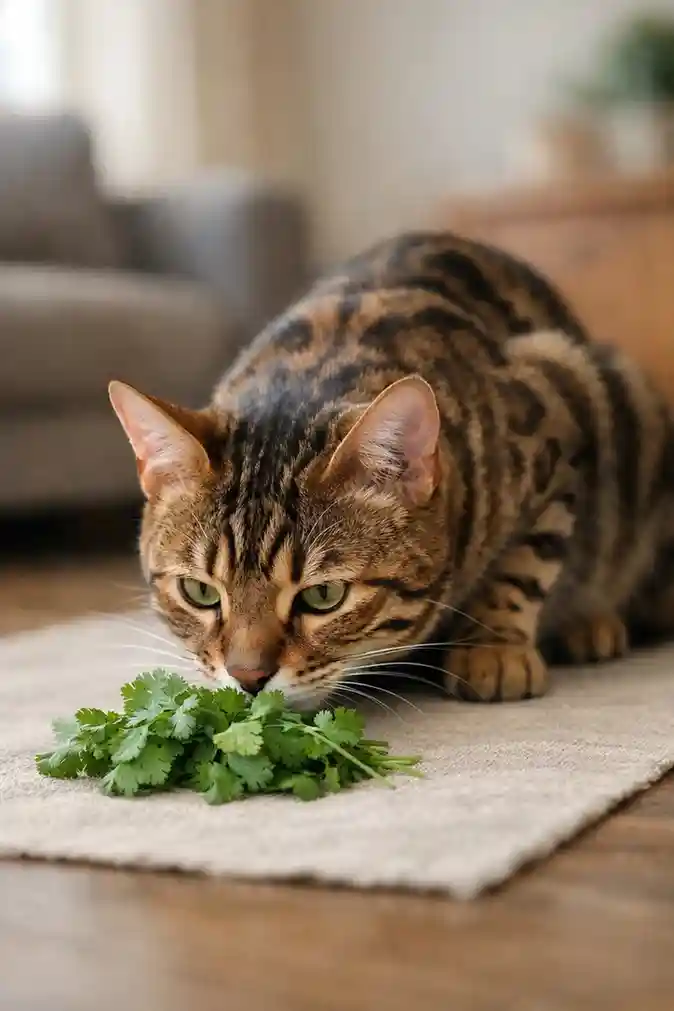
Cilantro attracts unexpected interest in some cats due to its high odor and the oils in the plant. Although it has no nutritional requirement, the odor and texture may stimulate curiosity, sensory interest, and exploration in some cats.
Strong Herbal Smell
Cilantro exudes strong and crisp oils that are noticeable in a scent-driven cat world. I watch as so many cats look into it just because the odor is new and very strong and unlike the odors at home that they usually do not pay attention to.
Plant Oil Sensitivity
Cats are able to respond to natural plant oil in aromatic herbs. These oils mildly excite the nervous system, generating interest but not intoxication. I think that this low stimulation is the reason why certain cats sniff, rub or paw cilantro in short periods.
Curiosity Over Hunger
When a cat nears cilantro, it is hardly ever related to food. I observe that it is more exploring and playing. Cats touch new things and smell them to discover their environments and not because they must eat vegetation.
Individual Cat Preferences
Each cat responds differently to herbs. Others disregard cilantro altogether and some are obsessed with it. I put this down to genetics and sensory tolerance and previous exposure just as individual humans perceive taste and smell differently.
Check Also: Enrichment Activity Generator
Cilantro & Cat Digestion
Cilantro is not toxic and the intestine of a cat is not made to digest vegetation. Even safe herbs may bring discomfort when consumed poorly. This part describes how cilantro can influence digestion and what little reactions become noteworthy signs to you.
Sensitive Stomach Reactions
The cats are known to have sensitive stomachs and respond very fast to new food. The cilantro can make the cat vomit or have loose stool because cats lack the enzymes to digest fibrous leaves easily.
Fiber & Gut Irritation
Cilantro may irritate an intestinal lining of a cat because of its plant fiber. When not digested, fiber may cause bloating, gastric or temporary diarrhea, particularly when your cat consumes more than a small amount.
Essential Oils Impact
The smell of cilantro leaves is natural, and it is due to natural oils. These oils can irritate the stomach of a cat and can lead to nausea especially in cats that have digestive problems or food allergies.
Overeating Effects
It can give stomach upsets when consumed in large quantities of cilantro simultaneously. Increase may overwhelm digestion resulting in recurring vomiting, pains and lack of appetite until the digestive system balances.
Check Also: Pet Food Transition Plan Generator
Can Kittens Eat Cilantro?
Kittens do everything with their mouth, but their bodies are yet to develop. Safe foods in adult cats may be unsafe with young kittens. Cilantro can appear insignificant, but it does not do any good in the initial growth stages.
Immature Digestion
A kitten does not develop and has a weak digestive system. Other herbs such as cilantro are not easily digested and thus can lead to stomach pain, diarrhea or vomiting on consumption even in small portions.
Higher Sensitivity Risk
The kittens respond better to new food than adult cats do. The oils and fibers of cilantro can aggravate their stomach lining causing discomfort and the risk of dehydration, which can be severe at a tender age.
No Nutritional Value
Cilantro does not favour the growth and development of kittens. Kittens require balanced diets which contain high proteins to grow, and herbs do not add value to the nutritional requirements of kittens.
Safe Exposure Rule
I would suggest that kittens should smell cilantro but not consume it. The gain of elimination avoids digestive problems, and natural curiosity is allowed without any health hazards or unneeded stress on diet.
Check Also: Pet Age to Life Stage Calculator
Fresh Vs. Dried Cilantro For Cats
The way it is prepared really counts with cats, although cilantro may seem innocent in any form. I dwell here on safety, digestion, and utility, that you may know which of the forms is the least dangerous, and which ought to be avoided by all.
Fresh Cilantro Leaves
The safest one is fresh cilantro leaves in case you can give your cat a small bite. I would suggest that they be washed well and the stems removed, and a few sliced leaves given, to save on the strain of digestion.
Dried Cilantro Herbs
Dried cilantro is compressed further and not easily digestible by the cats. I would not take it, because the drying process increases the oils that can irritate the stomach hence causing the vomiting or loose stool.
Store-Bought Seasonings
Cilantro seasonings can contain salt, garlic, or onion powder. I never regard them as safe in cats, since added substances may produce toxicity, dehydration, and severe digestive disturbance even in small doses.
Cooked Cilantro Dishes
Cooked foods that include cilantro are usually oil, spice, or sauce based. I would strongly suggest to keep them away of cats, since cooking will change the chemistry of the plants and addition of additives are not essential to health risk.
Check Also: Food Label Analyzer (Dry Matter Basis) Calculator
Safe Ways To Give Cilantro
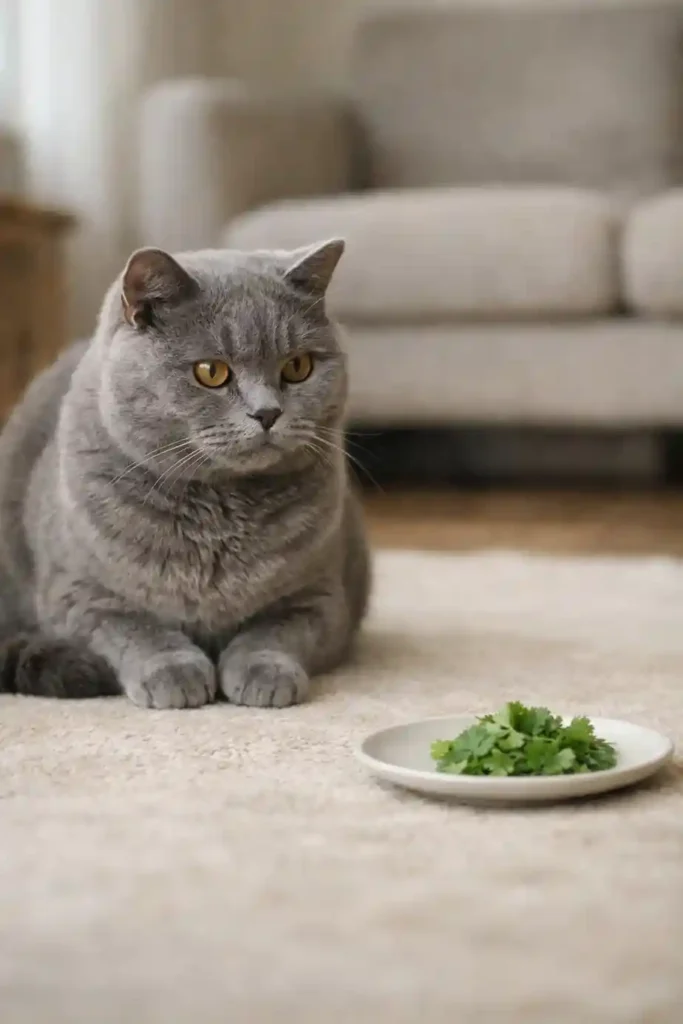
Cilantro must never be considered as a supplement, but rather as a luxury. I would only recommend it when your cat is fine, inquisitive and already accustomed to new smells and feel. Exposure is the aim, not consumption or nutrition.
Start With Tiny Amounts
One or two finely cut leaves are always the best place to start. This gives the digestive system of your cat time to respond mildly and minimizes the chances of stomach upset. Big portions add to the irritation and do not add value to your cat.
Use Fresh, Clean Leaves
Cilantro in fresh form is less toxic than stems or dried ones. I recommend that they be washed properly to eliminate pesticides or residue. Clean leaves reduce chemical exposure and are more readily tolerated by your cat during initial sniffing or tasting.
Offer Separately From Meals
Cilantro should never be mixed into your cat’s regular food. I recommend offering it separately so you can clearly observe reactions. This prevents food rejection and helps you identify whether cilantro alone causes discomfort or digestive issues.
Watch Your Cat’s Reaction
I always advise a reader to keep watching his cat at least 24 hours after exposure. Intolerance is signaled by vomiting, loose stool, or avoiding. In case of any reaction, I would recommend a cessation and resume your cat on a normal food.
Check Also: Safe Treat Allowance Calculator
When To Avoid Cilantro
Cilantro might seem innocuous, but it cannot be used on all cats and in all contexts. I keep on reminding you cats like consistency and superfluous experimentation may bring unnecessary suffering particularly in matters of health or even sensitivity.
Sensitive Stomach Cats
Cilantro is not recommended in case the cat vomits regularly, has loose diarrhea, or is sensitive to new food. I have observed delicate digestion aggravated by herbs even harmless ones, causing you needless anxiety, and distress to your cat.
Existing Health Conditions
Cilantro should not be eaten by cats with kidney disease, liver problems or inflammatory bowel problems. In such cases I would not recommend it at all, because it even in small doses can disrupt the digestion and complicate the current medical condition.
Kittens & Young Cats
I highly recommend that kittens not be given cilantro. Their digestive system is underdeveloped and plant food can easily lead to diarrhea or vomiting. You derive no advantage by introducing cilantro at this point, merely digestive discomfort.
Treated Or Seasoned Cilantro
Do not use cilantro that has been sprayed with pesticides or mixed with salt, oil, garlic, or onion. These additions to cilantro which I wish you to learn are far more destructive than cilantro itself can do great injury to your cat, in small amounts.
Check Also: Pet Quality of Life (QoL) Assessment
FAQs:
Is cilantro toxic to cats?
No, cilantro is not toxic in very small amounts.
Can cats digest cilantro?
Cats prefer meat, cilantro may cause mild stomach aches.
Do cats need cilantro?
No, cilantro does not contain any needed nutrients to cats.
Can kittens eat cilantro?
No, kittens should not eat cilantro due to sensitive digestion.
Final Words:
Cilantro may seem harmless, however cat care is never most likely fine. I would remember you of the fact that cats are fond of simplicity, of routine, of species-proper food. A small portion of fresh cilantro is usually safe, but it adds no significant nutrition, and can readily upset a sensitive stomach. Not merely toxicity, but also, safety is comfort, digestion, and long-term health.
When you choose to feed your cat cilantro, do it both with purpose, and in moderation and awareness. Observe what your own cat does, and follow the reaction, not curiosity, or fashions. In my opinion, informed calm feeding decisions are the most effective and should not interfere with the natural needs of your cat.
2 thoughts on “Can Cats Eat Cilantro”