
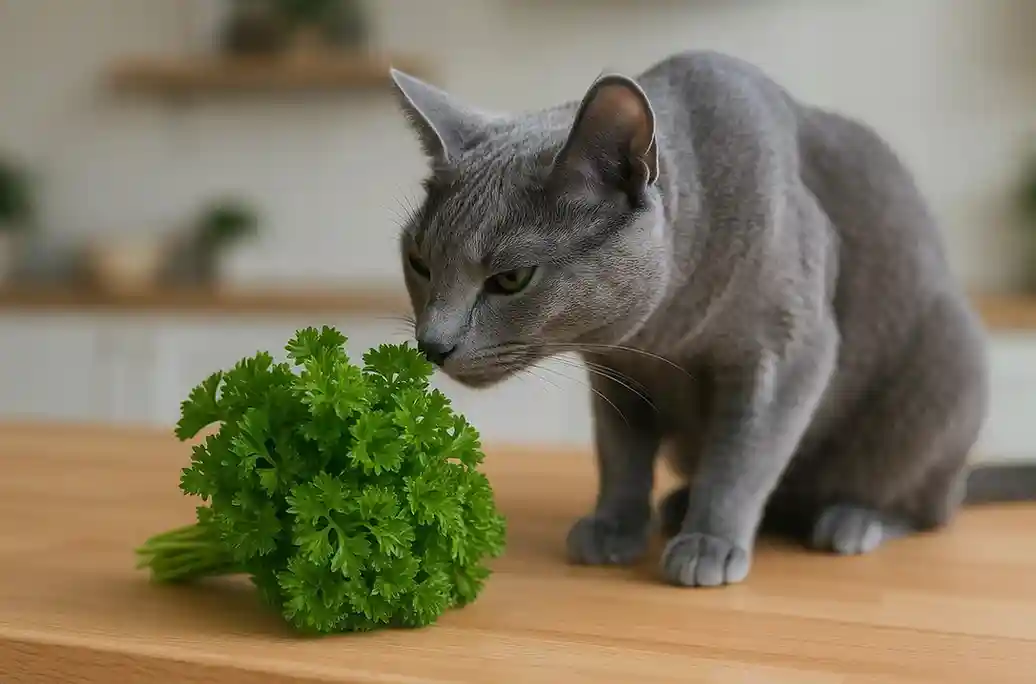
Are cats safe to eat parsley?
The majority of pet owners just left their cat to chew a leaf off the kitchen counter without even thinking about it and not all green herbs are digestible by the cat digestive system. Parsley is not a toxin; however, it can be troublesome in large quantities, or in a cat with kidney sensitivity. Training your cat to react prevents stomachaches, hidden perils and future complications.
My name is Dr. Elara Vance, a doctor of nutrition and a few years of research in feline behavior. I write to guide you with clear, honest explanations so you can make confident choices about your cat’s everyday health and safety.
In this blog, I explain whether parsley is safe, the benefits and dangers, how much is appropriate, and what you should do if your cat eats too much of it.
Parsley Safety For Cats
Small amounts of parsley can be safe to healthy cats but risks are encountered sooner as the dose is higher or the cat already has kidney or digestive issues. Boundaries are the key to avoiding unnecessary troubles.
Tiny Portions Safe
Healthy cats usually tolerate very small parsley amounts without discomfort. Their systems can handle tiny herbal traces, but not regular servings. Since cats aren’t built for plant matter, moderation becomes essential. Occasional little bits are fine when your cat shows no sensitivities.
Sensitive Cats Beware
Cats whose kidneys, urinary, or digestion is sensitive, should not take parsley. It contains a slight diuretic effect which may strain weak kidneys. A small amount can cause irritation, discomfort or unnecessary strain, hence the most responsible and safest choice is complete avoidance.
Avoid Oils Completely
Parsley essential oil is very unsafe to cats. Their liver cannot digest concentrated plant compounds, which causes rapid toxicity. Even diffuser exposure can trigger serious reactions, so all essential oil forms should remain completely away from your cat’s environment.
Too Much Causes Upset
On larger doses parsley is likely to cause an imbalance in a cat. Overuse can result in vomiting, diarrhea, frequent urination, or irritation in general. Cats aren’t designed to digest herbs in bulk, so keeping portions extremely small prevents unnecessary digestive complications and stress.
Check Also: Pet Toxin Checker and First Aid Guide
Parsley Benefits For Cats
Parsley is not vital to your cat, but small portions can provide some slight benefits. These advantages are minor and are never assured, but they can occur when parsley is eaten sparingly, in moderation, and by fit cats.
Fresher Breath
Cats have fresher breaths as parsley itself has some natural chlorophyll that removes odor gently. This is a weak, short-lived effect, which, in small quantities, can be made to do little good. I still find good dental care more preferable to herbs in long-term freshness.
Light Digestive Support
Parsley can provide a slight stimulus to digestion, particularly in cats that occasionally have slow stomachs. This is not a strong effect, but it differs in every cat. I will always advise that you begin very small to observe the reaction of the cat.
Tiny Antioxidant Boost
This herb contains herbal antioxidants which can be utilized to enhance healthy cells. Cats do not depend on the nutrient of plants, but small portions may give a protective coat. It is an addition not a substitute to actual feline food.
Minor Anti-Inflammatory Help
Parsley has natural products that may be of some minor anti-inflammatory use. These are small effects that do not intend to substitute medical care. Nevertheless, there are cats who may gain a small boost in overall comfort when given small, infrequent portions.
When Parsley Can Be Dangerous
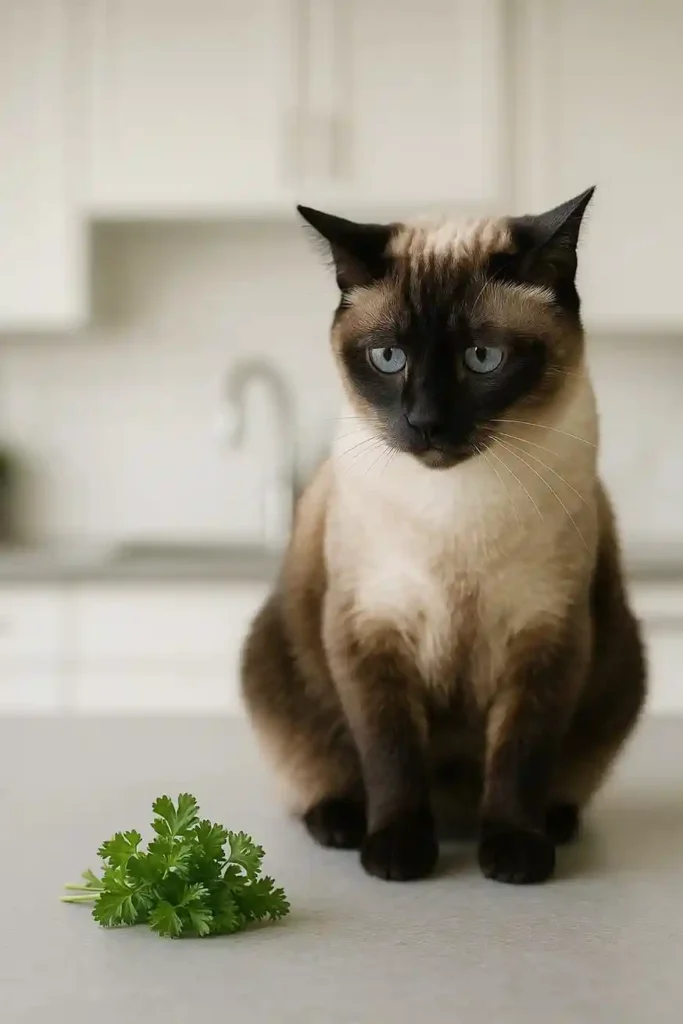
Although parsley may seem to be a safe plant, a small proportion of the plant may overwhelm a cat with its system. Small portions are fine, but bigger amounts may pose health issues that you do not immediately realize.
Plant Compounds
Parsley, likewise, has in it natural chemicals that are poisonous when cats feed in large amounts. The chemicals overburden the digestive system, burn delicate stomachs and cause the body to work hard to dissolve them. Small bites rarely cause issues, but repeated servings easily become trouble.
Read Also: Can Cats Eat Hot Dogs
Sunlight Sensitivity
Excessive consumption of parsley may make a cat sensitive to the sun. This response is slow and is frequently not noticed until the skin starts to irritate. Indoor cats are less exposed to danger but outdoor cats might experience discomfort when exposed to sunlight following a parsley overdose.
Digestive Upset
A cat digestive system is intolerant to a large amount of herbs. Parsley may cause diarrhea, gas, and vomiting when overdosed. Cats respond promptly and others days after, therefore, it becomes difficult to establish the cause without keen monitoring.
Essential Oil Dangers
The essential oil of Parsley is much stronger than the plant itself. Even small drops may ruin the liver of a cat and cause severe poisoning. It must never be spread, put on, or put in food, either in any little quantities.
Check Also: Pet Symptom Tracker & Triage Guide
Parsley & Cat Kidneys
Cats could be sensitive to parsley which might be considered harmless. I would like you to know these risks better to be able to select safe portions and not to stress a weak or already troubled kidney system.
Diuretic Push
Parsley raises urine volume, a fact that overworks weak kidneys. Even small bites are a problem because cats with chronic kidney problems lose hydration quickly. This additional force causes kidneys to overwork, causing unnecessary discomfort and future overload.
Not For Kidney Cats
Kidney disease cats are unable to process additional moisture or plant substances. Parsley causes undue stress, which causes nausea, weakness, or loss of appetite. Avoidance is the safest option in cats that are already found to have any kind of kidney trouble.
Healthy Cats Cope
Healthy cats are able to process minute quantities as their kidneys easily filter the mild plant compounds. A sprinkle here and there will do no good to them, but moderation helps. Too much parsley too often adds a workload their kidneys don’t need.
Read Also: Can Cats Eat Pickles
When To Get Help
Call a vet when your cat eats a lot of parsley. Early alerts will aid in avoiding dehydration, stomach disease, or urinary irritation. Keep track of drinking, litter, or energy change; it will help you not to get something serious.
Check Also: Universal Wellness Score (U-WSDAP)
Fresh Vs. Dried Parsley
There are two types of parsley that affect cats in various ways and knowing the difference will save you unnecessary trouble. The fresh parsley is also weaker than the dried parsley which is strong. Knowing such differences would make you reach a safe decision on behalf of your cat.
Fresh Is Milder
Fresh parsley contains more water, and its compounds are much weaker to cats. Even a small pinch will not overload their system, and it will not trouble most of the healthy cats. It is safer since the flavor, oils and concentration are kept naturally low.
Dried Is Stronger
When dried parsley loses water, it is much stronger and condensed. Even a small sprinkle contains more plant oils that can irritate sensitive cats. Since the nutrients are concentrated the chances of digestive upset, kidney strain or vomiting grow rapidly.
Read Also: Can Cats Eat Egg Yolk
Avoid Seasoned Mixes
Numerous jars of dried parsley are combined with salt, garlic powder, or onions. Such ingredients are very harmful to cats and may cause instant damage. Always read labels, and only plain, unseasoned parsley is used in case you want to taste it.
Use Only Tiny Amounts
The digestive system of cats is delicate and herbs need to remain optional. Even a crumb is sufficient in case you want to test the tolerance of your cat. Anything beyond that can overload their stomach or trigger unexpected reactions.
Check Also: Food Label Analyzer (DMB) Calculator
Parsley Parts For Cats
Cats chew leaves, stems, or anything they can find that is green, and they all act differently in the cat body. A few are mild, some are risky, and knowledge of the distinction will save you and your bowels or kidneys an inconvenience.
Leaf Safety
The softest and safest part of the herb is parsley leaves. They carry the light plant compounds and are not irritable to nibbles by cats. Nevertheless, small portions are recommended, because bigger ones can overload digestion and cause unneeded unpleasantness.
Stem Concerns
Its stems are more durable, flavorsome and full of furanocoumarins. Cats risk choking at the thicker pieces or not digesting them well. The stems should be avoided even in healthy cats as the risk exceeds the small nutritional benefit it could provide.
Root Risks
Parsley root cannot suit cats at all. The texture is thick, the compounds are condensed, and the digestive system of a cat is not made to digest this fibrous plant matter. A bite can cause stomach upsets or irritation even a small bite.
Best Choice
When preparing parsley, you must only use fresh and finely cut leaves. They are tender, soft, and safest of all the parts of the plant. Never use stems or roots as they may cause digestive problems, choking risks or unwarranted health problems.
Check Also: Pet-Friendly Home Smell Checker
Safe Parsley Amounts
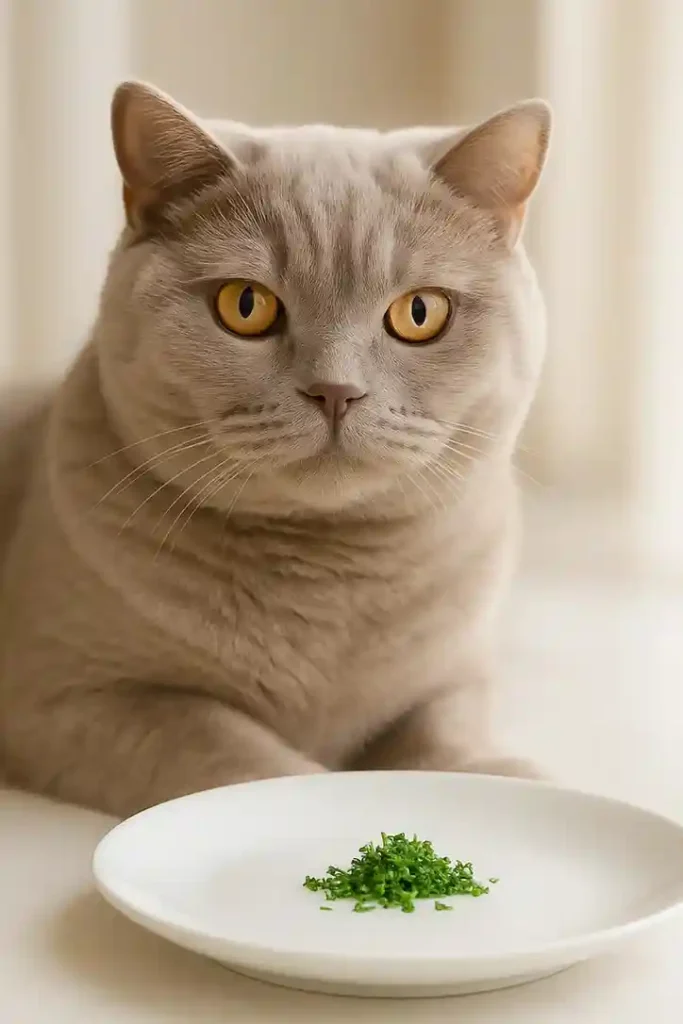
Although parsley may appear inert, your cat can just work with small, portions. Reduced portions keep the digestive system relaxed and do not overburden the kidneys or urinary system. The only safe method to offer this herb is with care.
Tiny Serving Size
A very small pinch of finely chopped parsley leaf should be given to healthy cats. This value makes the herb gentle and easy to deal with and less likely to cause stomach upset, urinary growing, and undue strain on delicate inner organs.
Avoid Large Portions
Large portions soon fill up the system of a cat since parsley is rich in potent plant compounds. Higher doses lead to stomach irritation, diarrhea or dehydration. The best method of preventing sudden and unexpected reaction is by keeping the serving small.
Consider Health Conditions
Parsley, even small portions, is bad when your cat has kidney issues, or is urinating or has a sensitive stomach. Such cats process the herbs differently and the natural diuretic effect of parsley is a major issue and this can complicate the health issues.
Watch First Reactions
The first time you are to serve parsley, serve only a crumb of parsley and watch your cat. Vomiting, change of litter box, loss of appetite all indicate you should immediately discontinue. Early detection will assist you in avoiding larger issues before they occur.
Check Also: Safe Treat Allowance Calculator
Ways To Serve Parsley To Cats
You may give parsley to your cat, but in small, strictly limited amounts that make the herb not harmful, and within their body easily manageable.
Use Small Amounts
Parsley in small pinch is the best introduction. Small doses decrease digestive load, limit the chance of toxicity, and enable you to observe reactions. The cats do not require herbs and little serving will be sufficient yet the cat will be able to taste new things.
Choose Fresh Leaves
Fresh parsley leaves are safer as compared to dried ones since they have lower amounts of plant compounds. Cats find it easier to chew and digest leaves and it prevents chances of upset stomach. Wash the parsley to remove pesticides or residues and serve always.
Avoid Seasoned Foods
Do not feed your cat on parsley with human spices. Cats are dangerous to garlic, onion, lemon, salt, and most spices. Small exposures can irritate the stomach or damage the red blood cells. Always serve plain, fresh parsley, no oils, sauces and flavorings.
Mix Lightly With Food
If your cat enjoys the taste, gently mixing a tiny sprinkle into their regular meal keeps the portion safe and controlled. This prevents large accidental bites and helps you observe any changes in digestion. Stop immediately if your cat shows discomfort or disinterest.
Check Also: Pet Food Transition Plan Generator
FAQs:
Is parsley safe daily?
No, they cannot be fed daily due to kidney and stomach problems.
Can kittens eat parsley?
No, kittens have sensitive systems and should avoid herbs entirely.
Is dried parsley okay?
Only tiny amounts are safe because dried parsley is more concentrated.
Does parsley help breath?
It may freshen breath lightly, but effects are mild and temporary.
Final Words:
Parsley is either safe or toxic all depending on what you use it. A small sprinkle is typically harmless, however, beyond that, it can overload the kidneys of a cat, upset their stomach, or cause other responses than you expected. In the case of herbs, moderation is not a choice, but the only safe practice. As I, look at the overall picture, my advice stays simple: treat parsley as an occasional flavor, not a daily supplement.
Your cat does not need it, but in case you want to do it, do it deliberately and attentively. One piece of care today secures the comfort, health and peace of your cat in years to come.
3 thoughts on “Can Cats Eat Parsley”