
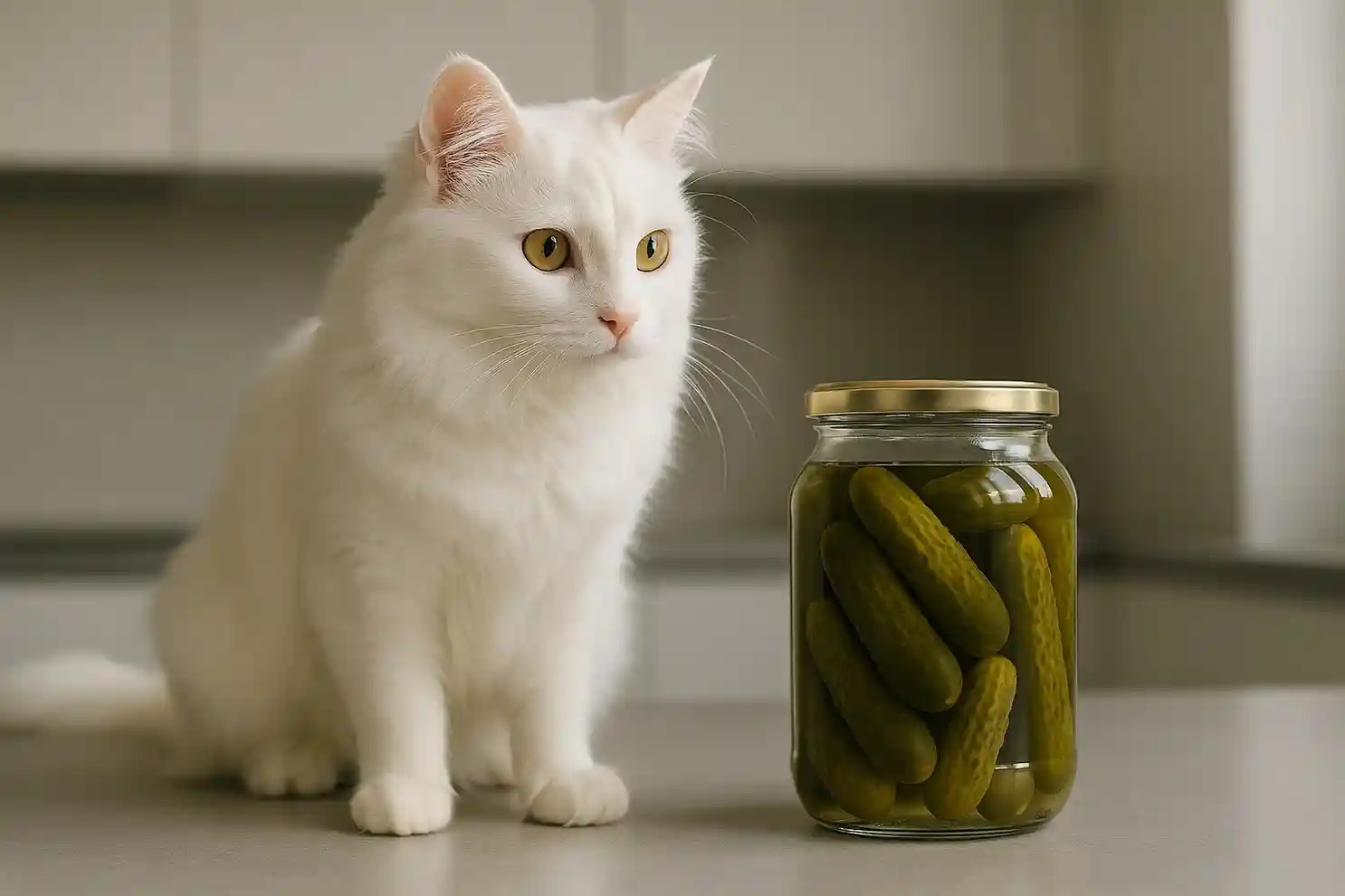
Do pickles make cats safe to nibble?
I would like to demystify the situation at the very beginning. Pickles would be fine enough but their salt, vinegar, and spices would not be exactly what your delicate cat digestive system would remain. Introducing the dangers, I want you to learn how these ingredients affect the health of cats and why your cat will feel comfortable and safe without pickles.
My name is Dr. Elara Vance, an American veterinarian who helps pet owners make informed and confident decisions every day. I have observed that a small meal error can lead to great issues. I am an honest, clear, experienced writer who makes you feel supported.
In this blog, I will take you through the risk, the ingredients, the safety issues and what to do should your cat already have a pickle. I will make it simple, direct, and useful.
Pickles & Cat Safety
Pickles are not dangerous, but they contain substances that do not fit in the sensitive system of a cat. Before you drop pickle into his body, you must know how salt, vinegar and spices will impact the body of your cat.
High Salt Risk
Pickles are high levels of sodium, which strain the kidneys and the hydration of your cat. Even minimal amounts will cause thirst, vomiting or discomfort. Cats are not good at salt and their body will respond to excessive sodium in the most unexpected manner.
Vinegar Irritation
Pickled with vinegar which is acidic, a cat has an imbalance in its stomach. It can lead to digestive upsets, nausea and slight discomfort. Vinegar does not sit well with cats and thus leads to unnecessary strain on their digestive system and overall well-being.
Spices Cause Trouble
Many pickles contain spices that cats shouldn’t consume, especially garlic or onion. Even powdered versions are toxic and may destroy red blood cells of a cat. They might find pickles unpleasant because other spices would irritate their mouth or stomach.
No Nutritional Value
Pickles can contribute nothing useful to the diet of a cat. They contain no protein, no healthy fats and no nutrients cats need. Pickles, since they will add no nutritional value and pose too much risk, are just not worth giving to your cat in any way.
Pet Toxin Checker and First Aid Guide
Nutritional Breakdown Of Pickles
Pickles might sound as simple, but the contents make it nutritious, which cats do not take well. I would like you to know what is in a pickle so you can see why it is not conducive to the health or natural dietary requirements of a cat.
High Sodium Levels
Pickles are very salty and burden the kidney of a cat leading to hydration imbalance. The body cannot process the surplus sodium when a cat eats salty food and the essential organs are overworked, which causes thirst, discomfort, and may pose a long-term health liability.
Acidic Vinegar Mix
Pickling vinegar provides an acidic environment that annoys the stomach lining of a cat. Majority of cats are sensitive to acidic food and it may cause vomiting, drooling or stomach upsets. It is just not designed to digest vinegar-laden ingredients in their system.
Spices & Additives
Pepper, dill, garlic powder, or mixed seasonings that are used to make many pickles may lead to digestive irritation. There are even toxic ingredients in small quantities. Cats are very sensitive to seasonings and their body reacts adversely to spices that humans have no problem with.
Read Also: Can Cats Eat Hot Dogs
Low Nutritional Value
Pickles do not contain any actual nutrients that aid the biological needs of a cat. Cats require protein, amino acids, and healthy fats, not acidic, salty vegetables with no beneficial vitamins for their system. Even “plain” pickles contribute nothing helpful to a cat’s diet or energy levels.
Check Also: Food Label Analyzer (Dry Matter Basis) Calculator
Salt Risks For Cats
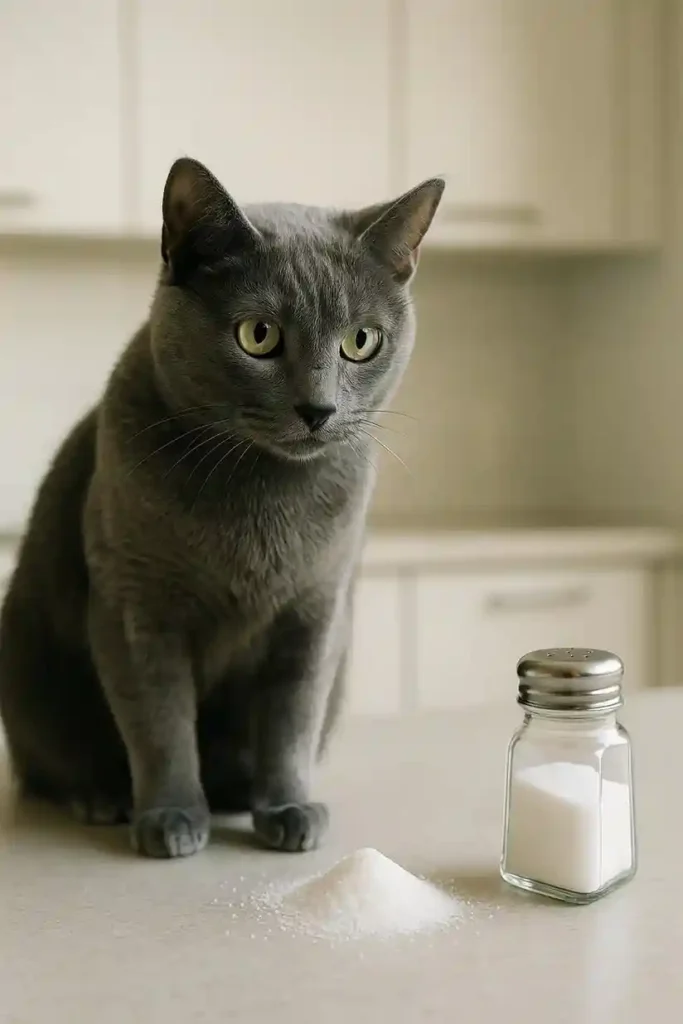
A little salt will be also a source of stress to your cat. Their kidneys cannot handle a high amount of sodium and even light overuse can cause imbalance of hydration, energy and stability at large. Here, we describe the internal and external impacts of salt on your cat.
Kidney Stress
The hampered sodium overload overworks the kidneys of a cat which strive to maintain fluid balance continuously. This pressure complicates the process of kidney filtering toxins and stable hydration. In the long term, even the mild exposure to salt may lead to long-term stress of organs and lowered kidney functionality.
Dehydration Spike
Excess sodium will cause dehydration of your cat, which will force the body to rapid dehydration. You might be drier, weaker, or fatigued. Dehydration impacts every system, such as cardiovascular and kidney and your cat will find it harder to remain vigorous, alert and at ease all day long.
Blood Pressure Rise
Excess sodium may raise blood pressure in a cat in less time than you believe. Blood pressure poses a strain on the heart, arteries, and the eyes. It raises the possibility of chronic heart diseases. Even small salty snacks will upset the balance of your cat and put pressure on important body systems.
Neurological Effects
The nervous system is destabilized when the sodium level is excessively high. Cats can be confused, shaky or just behaving oddly. These neurological changes happen because the brain depends on delicate electrolyte balance.
Check Also: Safe Treat Allowance Calculator
Vinegar & Your Cat’s Stomach
Vinegar in small quantities can destroy the delicate digestive system of a cat. Their stomach is not designed to digest acidic food and the discomfort they cause is usually noticeable, and results in digestive upset and unwarranted stress on the body.
Acidity Overloads Cats Fast
Cat stomach fails to digest acidic food and vinegar rapidly penetrates their system. This sudden change of pH irritates the stomach mucosa causing pain and digestive diseases. This irritation is readily followed by vomiting, drooling and noticeable abdominal pain that your cat can barely hide.
Stomach Lining Gets Irritated
Vinegar renders the stomach lining very acidic hence disrupting normal digestion and irritating sensitive tissues. This distress can lead to nausea, anorexia and diarrhea. Cats are slow in food breakdown, and even mild inflammation may last longer than expected and may cause painful symptoms.
Digestive Flow Gets Disturbed
Cats are creatures of slow, gradual digestion, and vinegar disturbs the beat at once. The stomach responds by slowing or speeding up food movement resulting in indeterminacy like cramping or diarrhea. The distortion also leads to gas build-up and hence your cat will be restless or rather withdrawn during the day.
Acid Can Trigger Reflux
Vinegar may alter the stomach acid too rapidly and result in acid reflux among cats. The acid moves to the esophagus where it can lead to burning, coughing, or swallowing. This pain causes eating to be unpleasant to your cat and can put off normal eating habits to several hours.
Check Also: Pet Wellness Score and Daily Action Planner
Plain Pickles For Cats
A pickle without salt is still not a healthy or useful snack to your cat. The texture, acidity, and leftover brine make it unsuitable for their digestive system and offer zero nutritional advantages.
Not Safe Even Without Salt
Even plain, unsalted pickles can appear to be safe, yet they also have acidic traces of brine and other ingredients that can make your cat sick. In the absence of nutritional value or digestive compatibility, these pickles are still a bad choice and can easily cause discomfort or slight digestive discomfort.
Acidity Still A Problem
Even without the salt, the vinegar contained in pickles remains strong enough to upset the stomach of your cat. Cats do not digest acidic vegetables and this irritation can cause nausea, drooling, or stomach sensitivity which is an unnecessary digestive problem.
No Nutritional Value
A plain pickle offers no protein, no helpful fats, and no essential nutrients a cat needs. Their bodies thrive on animal-based foods, and vegetables soaked in acid give them nothing useful. Feeding something nutritionally empty only risks irritation without giving your cat anything beneficial.
Better Choices Exist
There are safer alternatives that support your cat’s health without risk. Cooked chicken, plain turkey, or freeze-dried meat treats are much more natural of the body. These high-protein selections will bring in curiosity and will make your cat digestion steady and comfortable.
Check Also: Pet Age to Life Stage Calculator
Pickles: Harmful Or Safe?
Pickles are not toxic per se, but they present preventable hazards to your cat. Their salt, spices, and acidity are not so good even in small bites and they do not contain any helpful nutrient in the body of your cat.
Dangerous Ingredients
When garlic, onion, or seasoned brine is added, pickles get risky. The ingredients may destroy red blood cells, overwork the major organs. Even a little bit can cause unnecessary stress, which your cat cannot cope with well, so seasoned pickles become particularly unsafe.
Salt Problems
Pickles contain much more sodium than a cat body can bear. Salt excess leads to dehydration, kidney load, and electrolyte imbalance. Cats have sensitive kidneys and processed foods are high in salts which can cause discomfort and other major health issues without immediate effects.
Acidic Irritation
The stomach will be scalded by strong spices and vinegar, causing nausea, or stomach upsets in cats. They have an animal protein system, not acid vegetables cured in brine. This imbalance renders pickles an unwarranted cause of pain and bowel upset in your cat.
Read Also: Can Cats Eat Hard-Boiled Eggs
Still Not Worth It
Even plain dill pickles without any added garlic or onions are not toxic, yet nutritionally useless and irritating. Your cat will not benefit and will perhaps be thirsty or uncomfortable. An unhealthy snack that has a few disadvantages is not a snack to offer at all.
Check Also: Pet Quality of Life (QoL) Assessment
If Your Cat Ate Pickles
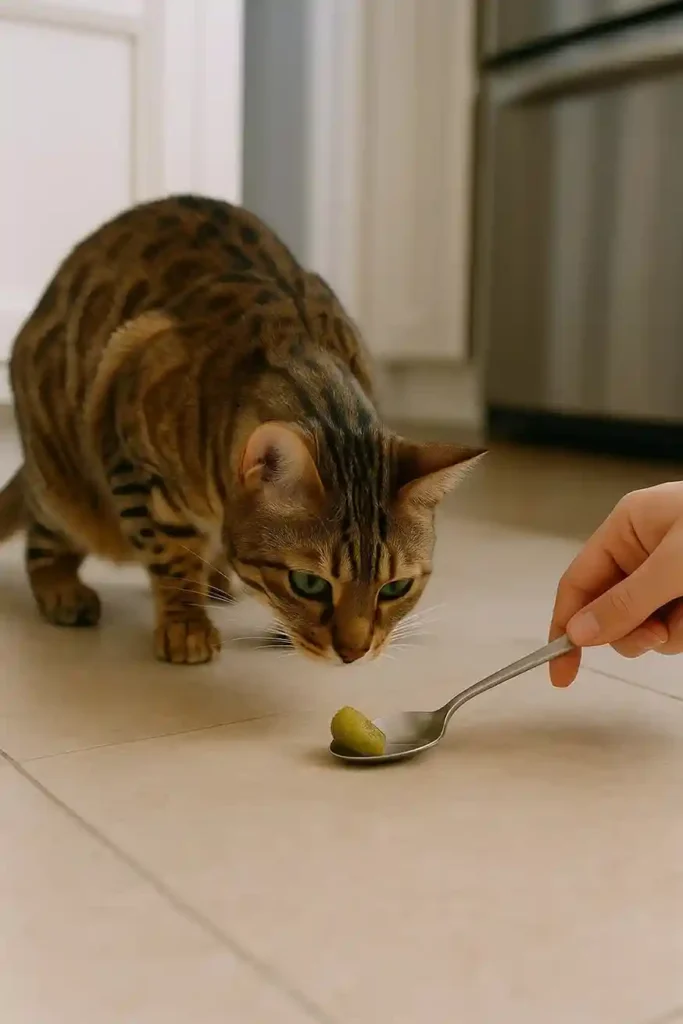
Do not panic in case your cat could get a bite of a pickle. You just need to react quickly, look at the ingredients and watch the behavior of your cat to be able to act safely and confidently.
Check The Ingredients
The first thing to do is to see what pickle it was that your cat ate. The situation is aggravated by such ingredients as garlic, onion, chili, and heavy salt. The level of risk in the pickle would be understood by knowing what was in the pickle.
Watch For Symptoms
See the cat that ate a pickle. Observes such symptoms as vomiting, drooling, diarrhea, restlessness or excessive thirst. These symptoms show how their body is reacting to the salt and acids and whether further care is needed.
Give Fresh Water
Provide clean, fresh water immediately to allow your cat to clear part of the sodium. Hydration will aid their kidneys to cope with the salt burden and lower the risk of dehydration, discomfort, and further irritation of the acidic constituents.
Call Your Vet
Contact your veterinarian when your cat ingests a pickle, garlic, onion, hot seasoning or brine. Symptoms which should be managed by the professional include vomiting, shaking, or weakness. Early consultation will make your cat safe and avoid complications.
Check Also: Emergency Fund Target Calculator
Safer Alternatives For Cats
I would like you to understand that before giving your cat a crunchy treat, there are softer, healthier choices as well. These options are natural cat food, and they will keep you off the stomach problems that pickles can cause so naturally.
Cooked Chicken
Cooked chicken is one of the safest and simplest gifts you can give your cat. I will recommend it when it helps them in their natural carnivore needs. It’s gentle on digestion, high in protein, and completely free from the salt and spices that irritate their system.
Plain Turkey Bites
Plain turkey bites are excellent if you want something thin and easy that your cat can handle. They provide good nutrition without filling up their stomach. In a diet plan, I prefer turkey because it keeps cats energetic, without any additional additives or severe spices.
Fresh Cucumber Slices
When your cat prefers the crunchy bite of pickles, a small slice of fresh cucumber is a safer substitute. It is tender, wet and not as irritating to their stomach. I always recommend taking very small slices so that your cat can feel the crunch without any pain.
Freeze-Dried Cat Treats
Freeze dried cat treats also make one of the most acceptable substitutes as they are made to suit feline digestion. They are meat, free of fillers and offensive flavoring. By prescribing them, they make cats have a snack that fits their natural dieting requirements and general health.
Check Also: Annual Pet Budget Planner
FAQs:
Can cats eat pickles?
No, pickles have sodium and vinegar that mishandles the digestion of your cat.
Read Also: Can Cats Eat Egg Yolk
Are dill pickles safe?
Dill is healthy, yet sodium and vinegar remains unhealthy.
Is pickle juice harmful?
Yes, the salt and acid so soon upset the stomach of a cat.
Are unsalted pickles okay?
Still not recommended because vinegar and spices bother sensitive feline stomachs.
Final Words:
On pickles and cats, I would rather have you absolutely sure of the reply: they are not a nice and nutritious snack. Their salt, vinegar, and spices have nothing your cat really needs and the risk of stomach irritation or even poisonous content makes it a food you should never leave unattended. Your cat is relying on you to sieve what looks harmless so that it strikes against their little digestive system.
Feed your cat properly, and you can care about what is proper, to their natural biology; plain meats and sweet textures and foods that are meant to suit their health wants. You save their kidneys, their comfort, their health over time with safer alternatives.
3 thoughts on “Can Cats Eat Pickles”