

Can cats handle bell peppers safely?
Not the fear or the worry, but the simple desire to keep them safe. It is the instinctive pull of responsibility that comes with loving a cat. It shows up in their curious sniff, their gentle paw tap on the cutting board, and the way they study every new food you hold. You need not listen to them before you realize that their world is the one that relies on you.
My name is Dr. Elara Vance, and I am an American veterinarian and lifelong cat owner who researches the ways that our daily decisions influence cat health. My clinical experience and personal bond with cats merge into one goal: helping you make decisions that protect the little life curled beside you.
In this blog, I’ll guide you through everything you need to know about cats and bell peppers safety, benefits, risks, digestion, and the real truth behind whether this colorful vegetable belongs anywhere near your cat’s bowl.
Should Cats Eat Bell Peppers?
Cats can explore colorful foods, yet bell peppers are not included in their natural food. They are harmless in small fragments, but unnecessary. Being aware of the body reaction of your cat will assist in making safe and reasonable feeding decisions.
Read Also: Can Cats Eat Cream Cheese
Usually Safe
Bell peppers are not toxic and the majority of cats manage a minute bite. Problems occur just in case they overeat or swallow large particles. A small taste is usually fine, but moderation keeps everything predictable and safe.
Tough To Digest
Cats don’t have the right enzymes to break down vegetables well. Bell peppers may feel heavy on their stomach and cause brief gas or softer stools. Their system works best with meat, so plant foods pass through awkwardly.
No Nutrition Gain
Bell pepper has vitamins, which humans absorb, but cats do not absorb plant nutrients effectively. They obtain all they require in meat based diets. Peppers don’t improve health; they’re simply a curiosity rather than a valuable food source.
Watch Reactions
Other cats can develop moderate sensitivity like loose stools, excessive licking, or loss of appetite following peppers. These symptoms tend to pass away very fast. In case your cat responds significantly, you should not feed it on bell peppers again.
Check Also: Pet Toxin Checker and First Aid Guide
Nutritional Value Of Bell Peppers
Bell peppers may appear to be easy, but they contain vitamins and plant compounds, which are important to your cat, even in small portions. The issue is, how these nutrients would be converted to something that a cat can utilize.
Vitamin Content
Bell peppers have vitamin C, vitamin A and a blend of antioxidants that aid the immune system. Cats also make vitamin C in moderation, and the little plant-based supplement does not pose any harm. These vitamins do not substitute the meat nutritional needs of a cat.
Fiber Amount
Peppers provide low levels of dietary fiber that may help to loosen feces or relieve slight digestive constipation. Nevertheless, vegetable fiber is not necessary to cats and is only a treat. Excess fiber may lead to rumbles, bloating, or gas in sensitive cats.
Hydration Boost
Bell peppers are watered and your cat receives a little bit of water with every little bite. It will not replace ordinary water drinking, but it offers a chilly crunch that satisfies curious cats experimenting with textures. The hydration advantages are small but favorable.
Low-Calorie Snack
Bell peppers contain practically zero calories to your cat, and therefore may be a harmless cheap energy snack in small quantities and frequency. The low percentage of fats helps avoid unnecessary weight gain and still gives your cat a new and exciting food experience.
Food Label Analyzer (DMB) Calculator
Can Cats Digest Bell Peppers Easily?
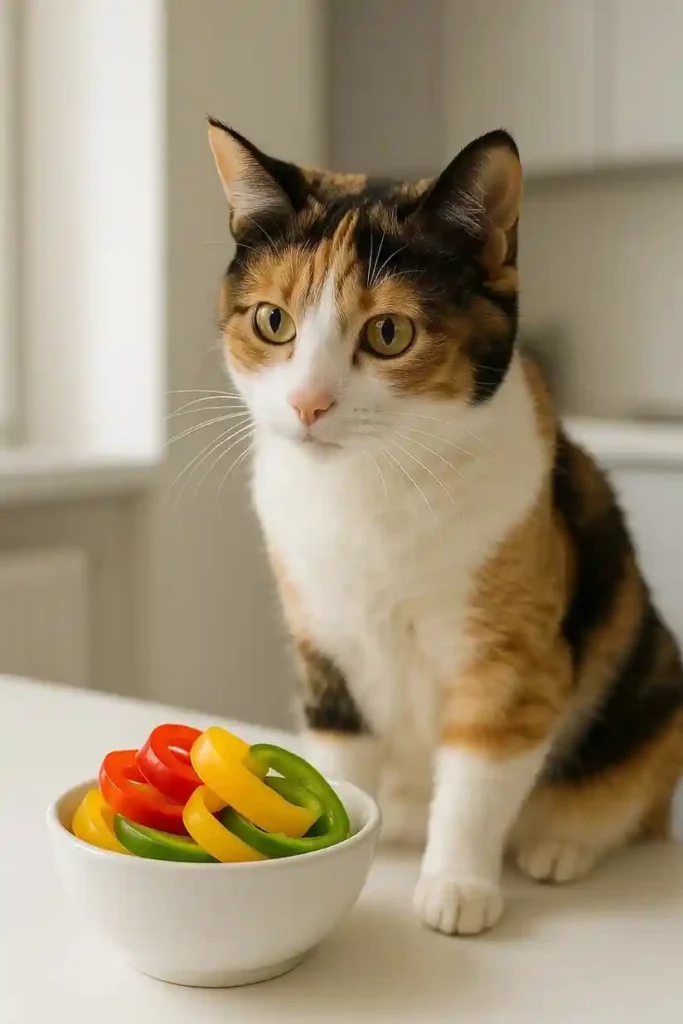
Cats can process tiny pepper grains, but are not designed to eat vegetables. This part demonstrates how readily bell peppers slide down the stomach of a carnivorous and what happens when your cat consumes some.
Cats Digest Meat Best
Cats are meat eaters and hence their bodies are meant to digest animal protein and not vegetables. Bell peppers pass through their system with minimal nutritional effects. Plant material might not get fully digested in your cat, and that is perfectly natural to carnivores.
Read Also: Can Cats Eat Parsley
Fiber Passes Through
Bell peppers contain fiber that cats can’t fully process. It is likely to go through the intestines without much help. Low doses may be used to keep the stool firm, and too much fiber may lead to loose stools or minor stomach upsets in sensitive cats.
Raw Pieces Are Tough
Raw bell peppers are tough and hard to chew by cats. Their teeth do not crush plant material. Big sizes may scratch the stomach occasionally leading to a short term vomiting or pain as the body attempts to project undigested pieces.
Cooked Peppers Are Softer
Raw bell peppers are less harmful to the stomach of your cat since the heat mellowed down the texture. Nevertheless, digestion is low, and the vegetable has very minimal nutritional value. It is safer than raw, yet still unnecessary component of a cats diet.
Check Also: Pet Symptom Tracker & Triage Guide
Health Benefits Of Bell Peppers For Cats
Although bell peppers are not an ingredient in the diet of a cat, there are nutrients planted in it that can benefit small aspects of your cat. These advantages are only important when the pepper is provided in small and harmless doses and not a daily meal.
Vitamin C Support
Vitamin C, present as natural sources in bell peppers, reduces oxidative stress in small amounts. Cats also generate their own amount of vitamin C, yet a small slice of pepper can give a small addition to immune balance without overwhelming their digestive system.
Hydration From Water Content
Bell peppers are rich in water and this may help to maintain hydration in cats that drink little. A small treat provides a gentle increase in water, particularly cats who consume a lot of dry kibble, without substituting normal intake of water.
Low-Calorie Crunch
A slice of pepper will provide a light and low-calorie bite with no noticeable impact on your cat. It is a safe occasional snack to the curious cats to sample the textures, providing a sensory stimulation without additional fats and sugar to their food.
Antioxidant Exposure
Natural antioxidants in red and yellow bell peppers help prevent small amounts of oxidative damage to cells. Although cats do not depend on vegetables as a source of nutrients, a small bite can provide insignificant antioxidant value with no effect on their general carnivore nutrition.
Check Also: Daily Pet Calorie Needs Calculator
Risks Of Feeding Bell Peppers To Cats
Despite being harmless, cats react to foods that do not belong to the natural diet differently. This part will give you the awareness of the actual danger, to prevent troubles before they occur and save your cat of unforeseen troubles.
Digestive Sensitivity
Cats are also carnivores and their stomachs can be easily tested by fibrous food products like bell peppers. Even small pieces may lead to stomach issues with loose bowels, minor nausea, or loss of appetite. Vegetables do not fit well in their digestive tracts.
Read Also: Can Cats Eat Pasta
Choking Concerns
The skins of bell peppers are hard and difficult to chew by some cats. Big bits can become lodged in the throat, particularly among young or old cats. This is a minor but significant choking danger, which escalates when the pepper is not chopped very fine.
Additives & Seasonings
Oils, spices, butter, or salt are found in many peppers eaten by humans. These extras can upset your cat belly or harm them long-term health. Even harmless appear seasoning may lead to vomiting or diarrhea as cats are very sensitive to flavoured or processed foods.
Allergic Reactions
Bell peppers might have mild allergy-like reactions on some cats, though that is not common. These are itchiness, sneezing, running eyes or mild swelling of the mouth. Any abnormal activity following consumption of peppers implies that the food should never be consumed.
Check Also: Universal Wellness Score (U-WSDAP)
Safe Ways To Offer Bell Peppers
Although bell pepper may not be a necessity in your cat, you may wish to take a small bite safely. It assists you in supplying a little, non-toxic scrap without disturbing the stomach and routine of your cat.
Start With A Tiny Test
You can start with a very small seedless piece to test your cat. Other cats will be curious and some cats will not even pay attention to the pepper. Monitor behavior, stool and stomach sensitivity. A little test can save you a lot of needless pain.
Remove All Seeds & Skin
Never leave any seeds or hard skin on and then put out a piece. Seeds may be irritable to digest, and heavy skin is stiffer to the stomach of a cat. The safest and easiest part is a small, soft inner slice, which they can nibble.
Serve It Completely Plain
Do not take pepper cooked in oil, salt, onion, garlic and seasonings. The digestive system of cats is sensitive and even light spices may irritate. The plain, uncooked, unflavored type of it is all you can safely present to your little adventurer.
Watch For Mild Reactions
Check on your cat after a meal. Other cats can have light stomach upset but others do not respond at all. Bell peppers are not to be used due to vomiting, loose stool, or various discomfort. Cats are all responsive to new food varieties.
Check Also: Safe Treat Allowance Calculator
Do Cats Enjoy Bell Peppers?
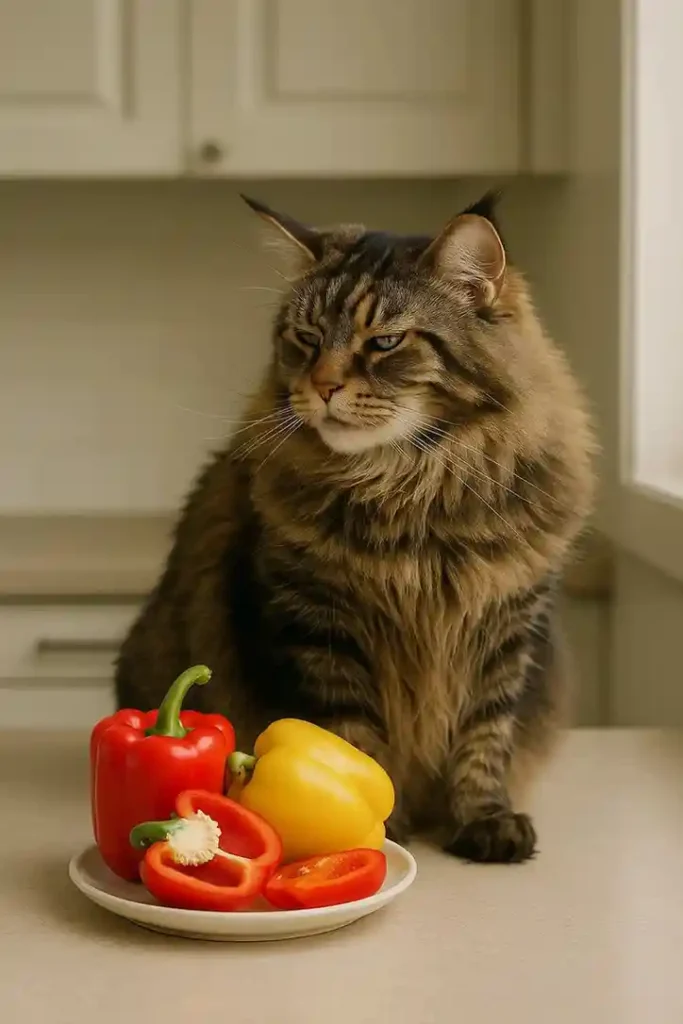
Bell peppers are not typically exciting to the majority of cats but are sniffed or pawed out of curiosity. They are normally interested in the sound, smell or color but not taste. Cats do not search in order to find vegetables but as they instinctively do anything new.
Curiosity Over Flavor
Cats often walk toward bell peppers out of pure curiosity, not hunger. Their instincts push them to inspect anything colorful or loud. When they sniff or paw at a pepper, it is usually an exploration moment rather than a desire to eat the vegetable.
No Taste For Vegetables
Bell pepper is not a tasty food because cats cannot taste at all. Not even the crunch or aroma usually suits them. Vegetables are not a sensory reward, as their diet is naturally constructed around meat. The interest of most cats diminishes after the first sniff.
Texture Isn’t Appealing
Bell peppers have a watery texture that is not comfortable with the chewing nature of a cat. Cats like softer and richer foods that reflect their natural prey texture. The pepper’s firmness usually feels strange to them, leading to quick rejection after a single nibble.
Some Cats Are Just Oddballs
A few cats break the rules and show liking for unusual foods, including bell peppers. This comes from personality, not nutritional need. When a cat shows repeated interest, it is simply an individual quirk rather than a sign that bell peppers are desirable.
Check Also: Behavior Symptom-to-Resource Matcher
Safer Cat-Friendly Alternatives
Some foods simply fit a cat’s body better than bell peppers. These selections provide mild nutrition without straining digestion or imposing avoidable dangers. You may serve them in small amounts, retaining in mind the carnivorous nature of your cat.
Cooked Chicken Bits
Cats tolerate lean cooked chicken far better than vegetables. Its soft texture and high protein match their natural dietary needs. A small, unseasoned piece can satisfy curiosity while supporting muscle health. It’s a safe treat when kept in moderation.
Plain Scrambled Egg
Eggs are a light energy and protein source and it is a snack, a snack that is cat-friendly. They are not cooked in butter, spices, and are simple to digest and not irritating the stomach. Serve a tiny amount to give flavor variety without unnecessary risks.
Cooked Pumpkin Spoonful
Pumpkin in small amounts of teaspoon is handy in digestion and mild constipation. Its soft fiber helps gut movement without overwhelming the stomach. It’s gentle, soothing, and widely recommended for sensitive cats when used sparingly and kept completely plain.
Soft Tuna Treat
A little bit of tuna offers strong aroma and flavor that cats adore. It should stay occasional because of sodium levels, yet it provides protein and excitement during feeding. Offered in tiny amounts, it adds variety without the complexity of vegetables.
Check Also: Pet-Friendly Plant Checker
FAQs:
Can cats eat peppers?
Yes, small bell pepper pieces are safe but offer minimal nutritional value.
Are peppers toxic to cats?
Cats do not need bell pepper in their food, and it is not toxic.
Do cats like peppers?
Most cats ignore peppers because their taste buds don’t detect sweetness.
How much pepper safe?
Only a tiny bite-sized piece occasionally to avoid stomach irritation.
Final Words:
Speaking about bell peppers, the fact is as follows: your cat does not need them, and a small bite will not cause any damage. The issue is to know their nature. Cats are creatures of protein, instinct and foods of which their bodies were made. By honoring that you keep safe their comfort, their digestion, and the faith they put in you whenever they come to the kitchen with the eyes of curiosity.
I know this because I have spent years observing how one small decision can make or break the health of a cat. Be alert, make well decisions, and remember the well-being of your cat.
3 thoughts on “Can Cats Eat Bell Peppers”