
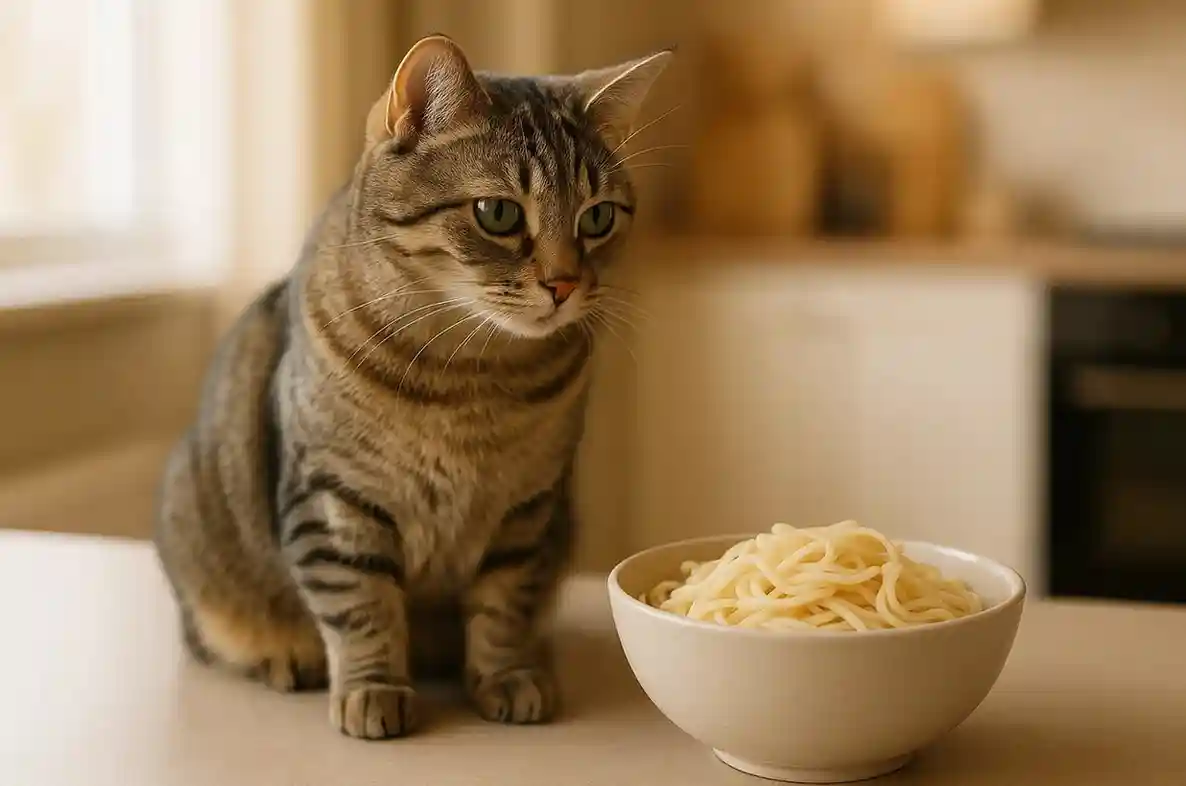
Can cats safely eat pasta?
This is a question that many cat owners will ask when their cat attempts to steal a noodle off of their plate and usually, this question will confuse many on whether or not pasta is a food that a cat can digest. Pasta is not the toxic ingredient, although it does not provide the nourishment that the cats really require, and most of the added components make it dangerous in daily feeding.
My name is Dr. Elara Vance, and as I take you through this topic, I have my years of veterinary practice, my U.S life to give you, I have my candid and realistic knowledge of the cat behavior with human food. I constantly deconstruct to ensure you make better decisions.
In this blog, you will understand the safety, risks, reactions, and healthier alternatives to pasta for your cat, all explained clearly and usefully.
Pasta Safety For Cats
Pasta is not bad in small quantities, but it is not a food that promotes the natural nutrition of your cat. I always instruct you to leave pasta as an accident bite, not a treat.
Read Also: Can Cats Eat Parsley
Plain Pasta Basics
Plain pasta is not poisonous and cats do not get anything good out of it. Carbohydrates are not utilized well by their bodies and pasta is empty calories. One noodle is not a threat, but it must not turn into something you consciously feed.
Digestive Limits
Cats have a problem with carb-rich food since their bodies are protein-based. The pasta can be bulky in the stomach causing slight bloating or discomfort. Although your cat may be fine with a small bite, frequent portions just overwork their digestive system.
Nutritional Gap
Pasta contains no essential cat required nutrients like taurine and good quality animal protein. Feeding foods without real value creates imbalances over time. Your cat may seem curious, but curiosity isn’t a sign that the food meets their needs.
Occasional Bite Rules
When your cat takes a noodle, do not panic. A small, bland piece is unlikely to cause trouble. The issue begins when pasta includes sauces, butter, cheese, or spices. Those ingredients shift pasta from mildly unhelpful to genuinely unsafe quickly.
Food Label Analyzer (DMB) Calculator
Plain Vs. Seasoned Pasta
There are pastas that appear innocent, but the items included in them transform the world of your cat. Plain pasta should be safe in small portions, whereas seasoned pasta can rapidly become harmful due to the toxic substances incorporated into the pasta sauces, oils, and spice.
Plain Pasta Basics
Plain pasta is prepared using water, flour, and sometimes eggs, which are not damaging, but have no nutritional value to cats. When your cat licks a small cooked bit without additives, the body processes it slowly and with no visible advantage.
Read Also: Can Cats Eat Pickles
Why Seasoning Is Risky
Old pasta may be loaded with garlic, onion, salt, butter, herbs, and spicy taste which cats should not drink. These ingredients stimulate the stomach, pressure the organs and can lead to severe reactions that your cat is not anatomically prepared to face or digest.
Hidden Ingredients
Most of the sauces contain some poisonous foods such as sugar, oils, milk and spice blends which cats find hard to digest. Even in small doses, these ingredients can cause vomiting, stomachache, or dehydration as their digestive system is not trained to complicated recipes.
What Cats Should Avoid
Pasta is not to be served with garlic, onion, cheese, cream sauces or spicy toppings. The components cause avoidable illnesses and problem on the digestive system of a cat that complicates and requires monitoring or treatment by a veterinarian.
Check Also: Universal Wellness Score (U-WSDAP)
Why Pasta Isn’t Good Often
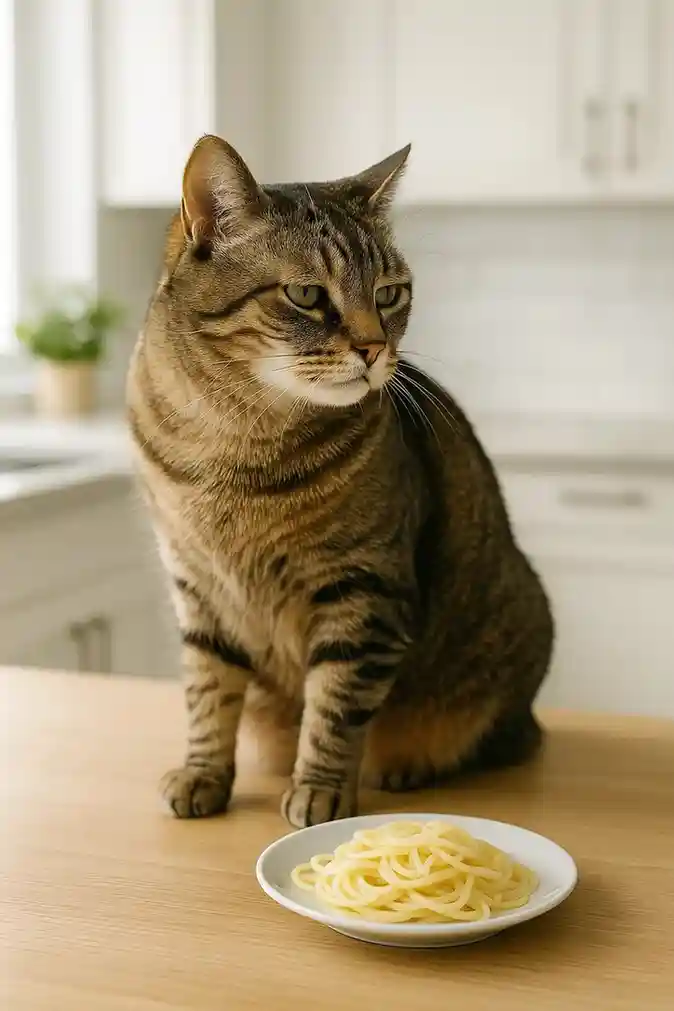
Pasta might sound innocent, but it does not contribute to the diet of your cat. It stuffs the stomach without providing the necessary nourishment to a carnivore. Regular feeding gradually changes your cat to the type of diet they are actually on.
Low Nutritional Value
Cats also depend on meat and basic amino acids to maintain normal functioning of their muscles, energy, and systems. Pasta has none of these nutrients, and it is the empty calories which are not healthy. Regular servings replace what cats should eat with unnecessary bulk.
Too Many Carbs
Cats do not digest carbohydrates well and so pasta is not good to digest in their stomach. Excess carbs would result in weight gain and hard labor metabolism. With time, this habit increases the risk of preventable long-term issues.
Digestive Stress
Majority of cats find it difficult to digest foods not in their usual menu, and those rich in carbs in particular. Pasta may produce bloating, slight vomiting, loose diarrhea, or stomach pain. These symptoms become more frequent with regular feeding and cause undue digestive stress in the long term.
Risk Of Additives
Pasta is rarely taken in pure states and majority of the additions are toxic. They do not need garlic, onion, cheese, butter, and sauces as they can lead to toxicity or serious stomach problems. Even a bit of these ingredients would do more than you believe to your cat.
Check Also: Pet Toxin Checker and First Aid Guide
Pasta Sauces & Cats
Pasta sauce might appear to be a safe dish, but it is one of the most dangerous to share with your cat. The slightest part contains something which is against the natural biology of a cat, and which irritates the stomach or is fatally toxic.
Tomato Base Risks
Tomato sauce might seem simple but is typically spiced with salt, sugar and aromatics that your cat cannot digest. Tomatoes are also mildly acidic which leads to stomach pain, and additives lead to more digestive stress. One lick is enough to cause unjustified irritation or random reactions.
Garlic & Onion Danger
Any pasta sauce that has been cooked with garlic or onion is instantly poisonous to the cat. These drugs damage red blood cells and lead to weakness, vomiting and pale gums. It is not even safe in the powdered form. Many sauces hide these seasonings, making all pasta sauces unsafe.
Creamy Sauce Problems
Cream sauces drown cats in fats and dairy that are not adequately metabolized in the body. Majority of cats are lactose intolerant and excessive dairy causes bloating, diarrhea and vomiting. The Alfredo, white sauce or cheese mixture is so thick so fast.
Oil & Spice Issues
Pasta sauces are based on oils, chili flakes, pepper, and herbs, which are not in the digestive system of cats. Cats react strongly to spices, and oils create unnecessary fat intake. Even simple olive-oil–based sauces irritate their stomachs more than expected.
Check Also: Pet-Friendly Home Smell Checker
Spotting Pasta Reactions
Certain cats have no trouble with tiny pasta bites, whereas others exhibit rapid distress. This section will teach you to identify the initial and severe symptoms to respond promptly, remain composed, and expose your cat to unnecessary stomach distress or reactions to hazardous ingredients.
Stomach Upset
Pastas can cause a small stomach reaction in cats especially when the pasta has dairy or seasoning. You can have soft stool, minor vomiting, or a gastric stomach. These symptoms normally occur in a few hours and are an indication of mere digestive irritation.
Behavior Changes
The cats tend to act out of their comfort zone. In case pasta did not sit, your cat can seem withdrawn, move less, avoid food, or hide in strange places. These movements are signs of something bad inside and you need to monitor the behavior of your cat as it changes.
Energy Drop
When your cat suddenly loses energy you know that he is not okay. It may seem to you that your cat is tired, bored or slow to respond. This fall may come after pasta with heavy ingredients, such as butter, cream, garlic, or onions which are more difficult to process.
Serious Warning Signs
Worse symptoms occur when your cat ingested pasta with harmful components such as garlic or onion. Observe pale gums, rapid breathing, weakness, or wobbling. They are red-flag reactions and necessitate prompt veterinary care before serious health complications arise.
Check Also: Universal Pet Body Condition Score (BCS) Index
Different Pasta Types
Cats can gnash little pieces of plain pasta, but the pasta type does not vary much in safety or nourishment. Each of them is carby, does not provide any actual advantage, and can lead to digestive issues when consumed excessively.
Whole Wheat
Whole wheat pasta can be healthier, but cats cannot digest high level of fiber due to bloating, gas or slight stomach pain. There is no need or any useful nutrient to an animal that consumes meat, and that is why it is not needed.
Egg Pasta
Egg pasta contains slightly more protein than noodles, but the difference is too small to make any difference on your cat. It has much starchy carbs, even though it has eggs, and has no essential vitamins or amino acids which your cat actually needs in meat.
Gluten-Free
Gluten-free pasta is typically composed of rice, corn, or legumes, which cats do not digest easily. They may be concerned with the texture, yet not the ingredients matches their biological needs. Small portions are not bad, but this kind is not nutritionally significant.
Fresh Pasta
Fresh pasta can be full of additional salt, oil or eggs and it is even less appropriate. Cats do not need these added food substances and their stomach can get troubled. A single bite is not poisonous, but fresh pasta cannot be converted to a snack or a delicacy.
Check Also: Safe Treat Allowance Calculator
Do Cats Even Like Pasta?
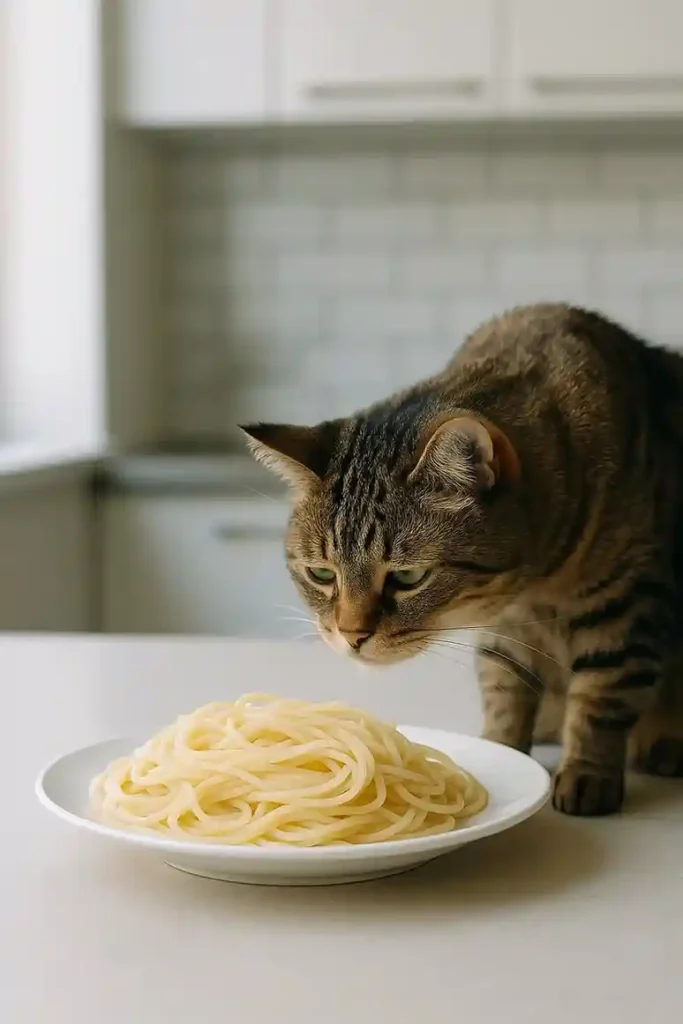
Most cats show interest because you’re eating it, not because pasta attracts them naturally. Their instincts lean toward meat-based scents, so pasta rarely appeals on its own. Curiosity drives their behavior far more than flavor, texture, or any real desire for noodles.
Smell Isn’t Appealing
Cats are olfactory animals and pasta is hardly appealing to them unless it is covered with sauces or oils they are not supposed to eat. The noodle itself is a tasteless one, and it has no trace of prey. Their curiosity comes from what you’re eating; not what they genuinely want.
Texture Isn’t Natural
A soft, slippery noodle doesn’t match the textures cats instinctively enjoy. They prefer chewy, meaty resistance that mimics natural prey. Pasta feels odd in their mouths, so most cats explore it briefly and lose interest once they realize the texture offers no satisfaction.
Behavior Mimics You
Cats often copy your habits because they associate your actions with safety and reward. When you eat pasta, they think it’s valuable. Their behavior reflects interest in you, not in the food itself. The noodle becomes symbolic rather than desirable to them.
Curiosity Over Hunger
Cats nibble pasta more of exploration rather than appetite. They do not consider it a meal but a strange item. They feel like protein-foods, and pasta has nothing to recommend it to their inclinations. Wonderment soon disappears when they find it has nothing to give.
Check Also: Behavior Symptom-to-Resource Matcher
Healthy Alternatives To Pasta
Although pasta sounds more innocuous, simple and high-protein foods much closer to their natural instincts do their body better. These healthier options maintain their digestion, their energy and their overall health without the unnecessary carbs or irritants.
Cooked Meat Bits
Clean and simple protein to your cat comes in small servings of plain cooked chicken, turkey or fish. These foods are simple to digest, imitate their bodies are designed to feed upon, and offer nutrition that pasta cannot give. Use small portions and be careful not to use any seasonings.
Freeze-Dried Treats
Frozen meat products are a pure source of protein food that satisfies the natural requirements of the cat. They could be stored, nourished and they are far healthier than human foods. Always use the single ingredient versions so as not to disrupt the stomach or appetite of your cat with fillers.
Simple Veggie Snacks
Although cats do not need vegetables, small bites of cooked carrot, green bean, or cucumber are harmless snacks to a curious eater. These must be occasional, not a dietary staple, and should be eaten in small, soft, unseasoned portions to be the more easily digested.
Commercial Cat Treats
Good cat treats are superior because your cat gets to feed on safe and pet friendly ingredients that are designed to meet their system. Identify high protein, low carb and free artificial flavors products. These snacks fill their stomach much better than pasta, which does not burden the digestion and redundant energy.
Check Also: Pet Food Transition Plan Generator
FAQs:
Can cats eat pasta?
Cats may consume small plain pieces of pasta, yet these do not provide nutritional value.
Read Also: Can Cats Eat Egg Yolk
Is pasta toxic for cats?
Pasta is not dangerous, but usual added seasonings may be hazardous.
Can kittens eat pasta?
Kittens should never eat pasta because their developing systems need protein-rich diets.
Is tomato sauce safe?
No, tomato sauces usually have garlic and onion that is harmful to cats.
Final Words:
I want you to remember one thing clearly: pasta may look harmless on your plate, but your cat’s body runs on instincts that pasta simply can’t support. Their systems depend on meat-based fuel, not carb-heavy foods created for humans. Although a small ordinary noodle will not plunge them into harm, it will not provide them with anything valuable as well.
The food you give your cat determines their future health, comfort, and energy more than you can imagine. By remaining safer, more protein-oriented, you safeguard their digestion, unnecessary risks, and respect their natural biology.
3 thoughts on “Can Cats Eat Pasta”